
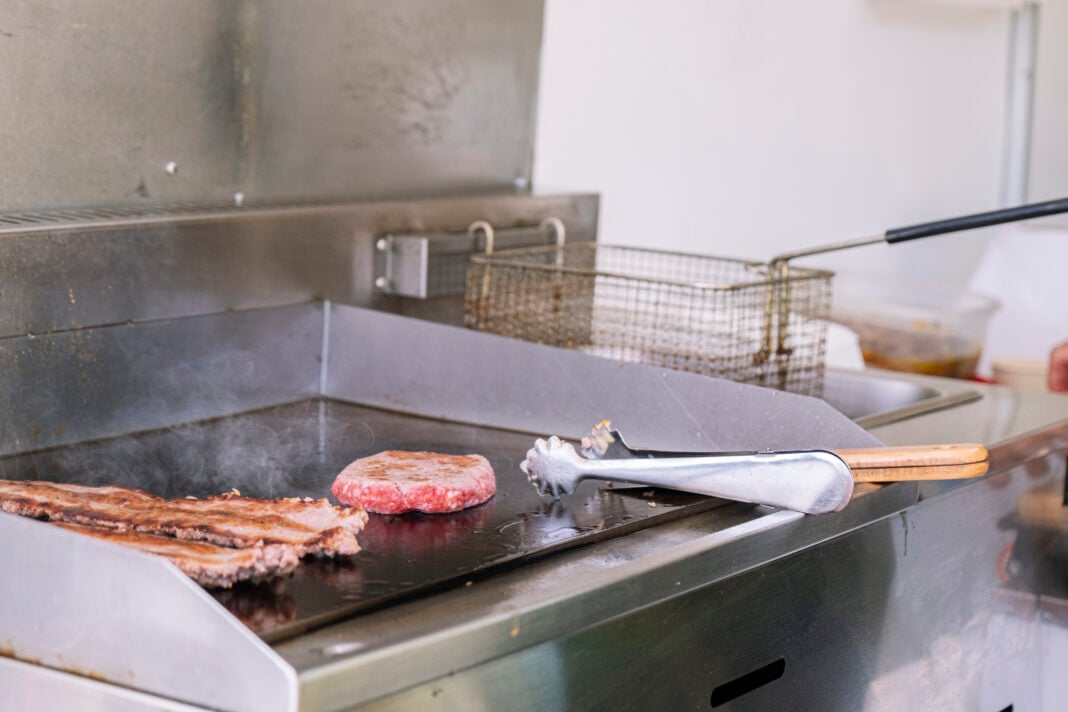


In a busy commercial kitchen, consistency isn’t just a goal — it’s a requirement. Customers expect the same great burger, steak, or grilled chicken every single visit. While your recipes and skills matter enormously, the equipment beneath your food plays a more critical role than many chefs and operators realize. Specifically, your commercial grill’s build quality directly shapes the results on every plate.
The Hidden Variable: Heat Distribution
One of the most significant ways build quality affects your output is through heat distribution. A well-constructed commercial grill uses heavy-duty materials — thick cast iron or robust stainless steel grates, reinforced burner systems, and solid housing — to distribute heat evenly across the cooking surface.
A grill built with inferior materials develops hot spots and cold zones over time. What does that mean for your kitchen? Inconsistent cook times, uneven searing, and food that’s overdone in one spot and underdone in another. When you’re turning out dozens of plates during a dinner rush, those inconsistencies become costly — in food waste, in refires, and ultimately in customer satisfaction.
Durability Under Pressure
Commercial kitchens run hard. Grills operate for hours on end, often through multiple services in a single day. Build quality determines how well a unit holds up under that kind of sustained pressure.
Cheaper construction tends to warp, corrode, or degrade faster. When grates warp, contact with the cooking surface becomes uneven. When burner components corrode, flame output fluctuates. Each of these small mechanical failures creates subtle but real changes in how your food cooks — changes that erode the consistency your customers rely on.
A grill built to commercial-grade standards resists these pressures. The materials and construction methods used in high-quality units are specifically designed to maintain structural integrity and performance output over the long haul.
Temperature Control and Precision
Professional-grade grills offer tighter, more reliable temperature control. This is a direct function of build quality — specifically, the quality of the burners, the valves, and the thermal design of the unit itself.
When temperature control is precise, your cooks can work confidently with defined heat zones. They know that low is low and high is high, every time. That predictability is the backbone of consistent cooking. It allows you to train staff effectively and maintain quality standards across different shifts and service periods.
Poorly built grills tend to have imprecise controls that drift over time. What starts as a “medium-high” setting gradually stops behaving like one. Small adjustments become guesswork, and guesswork is the enemy of consistency.
The Long-Term Cost Equation
There’s a common tendency to view a lower upfront cost as a financial win. But build quality is really a long-term investment calculation. A grill that degrades quickly means more frequent repairs, more part replacements, and — eventually — earlier replacement of the entire unit.
Beyond direct costs, consider the operational impact. Every hour a grill is down for repair is lost revenue. Every inconsistent dish that goes back to the kitchen costs time, food, and customer goodwill. High-quality construction reduces all of these risks.
Choosing the Right Grill for Your Operation
When evaluating commercial grills, look closely at the materials used in the cooking surface, the burner assembly, and the overall frame. Ask about heat output ratings, warranty terms, and manufacturer support. These details reflect the confidence a manufacturer has in their own build quality.
Your grill is one of the most used tools in your kitchen. Investing in equipment built to perform consistently — day after day, service after service — is one of the smartest decisions you can make for your operation and your guests.