
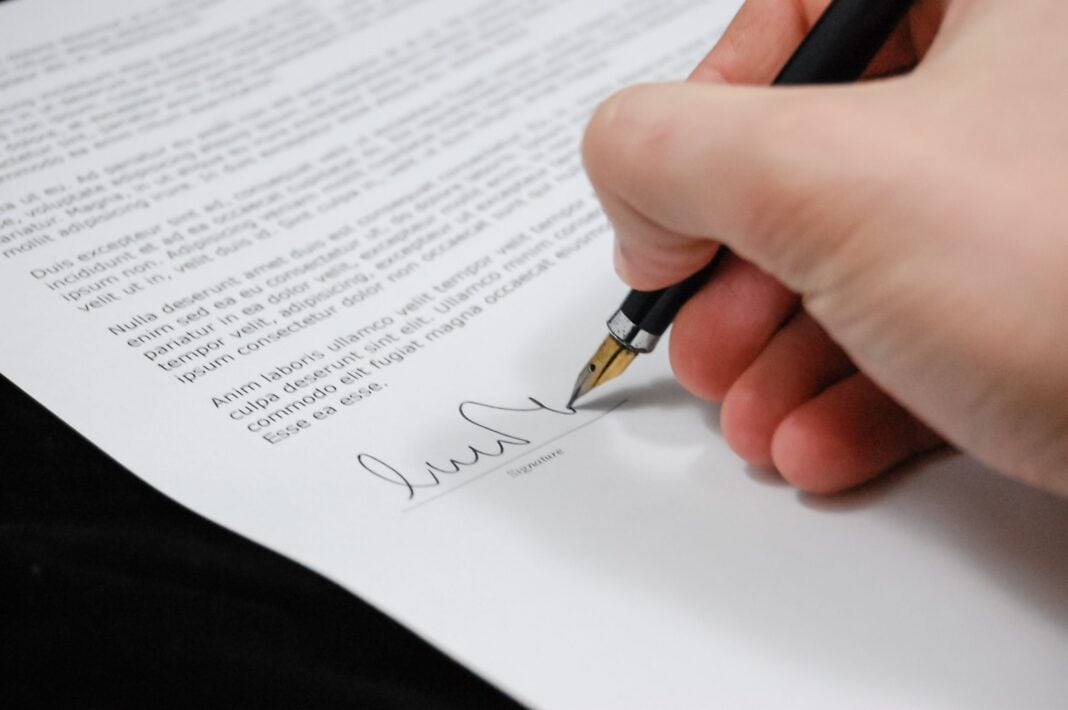


A patent license agreement spells out the deal between an inventor who owns a patent and a company that wants to use it. At minimum it defines what rights are granted, whether those rights are exclusive, the territory and time period they cover, how the company pays, and who is responsible for defending the patent. Everything else in the document supports those core points. Reading one for the first time is less intimidating once you know which clauses do the real work.
The grant: what rights change hands
The heart of the agreement is the grant clause. It states exactly what the company may do with the patent: make the product, use it, sell it, offer it for sale, or import it. A license is not a sale. The inventor keeps ownership of the patent and gives the company permission to operate within defined limits. The grant clause draws those limits, so it is the first thing to read closely.
Exclusive versus nonexclusive
An exclusive license means only that company can use the patent, sometimes even excluding the inventor. A nonexclusive license lets the inventor grant the same rights to others as well. Exclusivity usually carries higher expectations from both sides, because the company is betting on being the only one in the market with the product. The agreement says which type it is, and that single choice shapes much of what follows.
Territory and term: where and how long
Territory defines the geographic area the license covers, whether that is one country, a region, or worldwide. Term defines how long the license lasts. Many agreements run for the life of the patent. The U.S. Patent and Trademark Office (USPTO) sets the term of a standard utility patent at 20 years from the filing date, so a license tied to the patent’s life inherits that clock. A design patent, which the USPTO grants for 15 years from issuance, would carry a different horizon.
Money: royalties, minimums, and advances
The financial section is where most attention lands. The common structure is a royalty, a percentage of sales paid to the inventor, though agreements also use flat per-unit fees. Rates vary widely by industry and product, and no reliable source can name a figure that applies across the board, so any percentage in a template is a starting point for discussion rather than a standard.
Two supporting terms often appear alongside the royalty. Minimum annual payments require the company to pay a floor regardless of sales, which protects an inventor when a licensee is slow to bring the product to market. An advance is an upfront payment credited against future royalties. Reporting and audit clauses set how often the company reports sales and whether the inventor can verify the numbers.
A caution on expectations
It is worth separating what the agreement contains from what it delivers. A royalty rate on paper describes how money would be calculated if the product sells. It is not a projection of income, and no honest agreement promises one. The clauses define mechanics, not results.
Control: who enforces and who improves
Two more clauses decide practical control. Enforcement addresses who acts if a third party infringes the patent, the inventor, the company, or both, and who pays for the fight. Improvements address what happens to new versions or refinements: whether they belong to the inventor, fall under the existing license, or require a new agreement. These clauses rarely make headlines, but they matter when a product succeeds and others take notice.
Termination and the fine print
Termination clauses state how either side can end the agreement, often for missed payments or failure to bring the product to market within a set time. A quality-control clause may let the inventor protect the product’s reputation. A dispute-resolution clause names the law that governs the contract and how disagreements get settled. None of these are decorative; each one allocates risk.
Reading one without going it alone
Understanding the structure of an agreement is useful, but interpreting the specific language in a live deal is a job for a qualified attorney. This article is general information and not legal advice. If you want a clause-by-clause walkthrough written for inventors, a plain-language breakdown of a patent license agreement covers each section in order.
The path to a license agreement runs through protection and presentation first. Integrated firms carry an inventor from idea to the negotiating table. Enhance Innovations, an invention design and product development firm founded in 2010 in Champlin, Minnesota, keeps design, engineering, marketing, and licensing representation under one roof, so the same team that builds the presentation package can support the conversation when terms are on the table. The USPTO and the Small Business Administration (SBA) both publish free primers on licensing that are worth reading before you sign anything.
The short version
Grant, exclusivity, territory, term, royalty, control, termination. Learn those seven and you can read most patent license agreements well enough to ask the right questions, which is exactly what a first-time inventor should do before signing.