


For many combat veterans, the war does not end when they step off the plane onto home soil. The uniform comes off, the weapon is racked, but the internal landscape remains a conflict zone. The silence of civilian life can be deafening, filled only by the echoes of trauma, physical pain, and a profound, lingering darkness.
This is the reality Joseph lived with for years. As a combat veteran, he carried the heavy invisible backpack of severe PTSD and chronic physical pain—a burden that traditional medicine had failed to lighten.
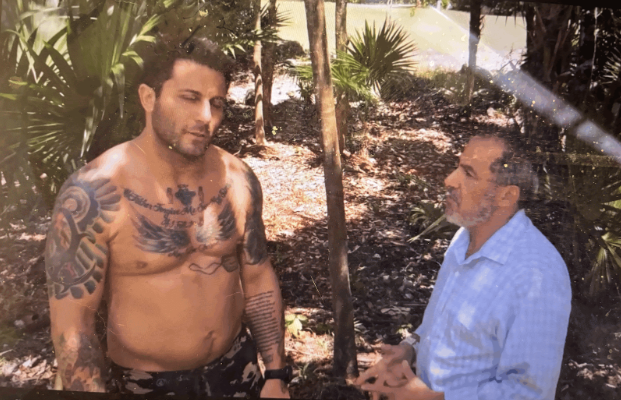
In a recent, deeply moving conversation with David Dardashdy, Joseph opened up about his life before and after discovering a groundbreaking treatment that changed everything. His story is not just one of symptom management; it is a story of resurrection. It is a testament to the fact that even after the darkest nights of the soul, the sun can indeed rise again.
The Weight of the Armor: Life Before Healing
To understand the magnitude of Joseph’s transformation, one must first understand the depth of his struggle. In the video interview, Joseph describes a life defined by anger, isolation, and physical agony.
“I was burdened by darkness,” Joseph admits to David. This wasn’t a poetic metaphor; it was his daily reality. Like many veterans, Joseph’s nervous system was stuck in a perpetual state of ‘fight or flight.’ The hypervigilance that kept him alive in combat became a cage in civilian life.
To cope, Joseph did what he was told to do: he followed the standard medical protocols. For years, he navigated the revolving door of prescriptions. While the medication aimed to stabilize him, it often acted as a numbing agent—dulling the pain but also dulling his joy, his connection to others, and his sense of self. He was surviving, but he wasn’t living. He was trapped in a cycle of managing side effects while the core wound—the spiritual and emotional trauma of war—remained untouched, festering beneath the surface.
A Leap of Faith: Choosing a New Path
The turning point came when Joseph realized that the current path was leading nowhere. He was tired of merely existing. He sought something radical, something that could reach the places traditional therapy hadn’t touched. This search led him to the groundbreaking treatment facilitated by David Dardashdy’s team.
In the interview, the rapport between David and Joseph is palpable. It is a conversation between two men who understand the gravity of the decision to seek alternative healing. Joseph describes the trepidation of trying something new, but also the desperate hope that pushed him forward.
He didn’t just want to lower his pain score; he wanted his life back.
The Transformation: From Anger to Joy
The most striking part of Joseph’s testimony is the description of the shift he experienced during treatment. It wasn’t a gradual fade; it was a fundamental release.
Joseph describes the experience as the lifting of a heavy veil. The anger that had been his constant companion—the shield he used to keep the world at bay—began to dissolve. In its place, he found something he hadn’t felt in years: relief.
“I feel a sense of joy I haven’t felt since I was a child,” Joseph shares, a smile breaking across his face that stands in stark contrast to the stories of his past.
This transformation wasn’t just psychological; it was somatic. The chronic pain that had plagued his body, often exacerbated by the tension of PTSD, began to recede. By addressing the root trauma, the physical manifestations of that trauma lost their power. The knot in his stomach untied. The tension in his shoulders dropped. For the first time in a long time, Joseph was at home in his own body.
Restoring the Spirit
Perhaps the most powerful insight from Joseph’s journey is the distinction between curing the body and healing the spirit. Standard veteran care often treats the soldier as a biological machine that needs repair. But Joseph’s experience highlights that we are spiritual beings.
In his conversation with David, they explore how the treatment reconnected Joseph with his “true self.” The war had fractured his spirit, leaving him feeling unworthy and disconnected from the divine or the natural world. The treatment acted as a bridge, spanning the gap between his trauma and his soul.
He speaks of a “spiritual restoration.” This is the key difference for many veterans undergoing this type of deep healing work. They don’t just come back “sober” or “calm”; they come back connected. They rediscover a sense of purpose and wonder that the horrors of combat had stolen from them.
The Hardest Battle: Forgiveness
A central theme of the interview, and one that will resonate deeply with every veteran watching, is the concept of forgiveness.
David Dardashdy guides the conversation toward this difficult topic, and Joseph responds with raw honesty. For veterans, forgiveness is multifaceted. It involves forgiving the enemy, forgiving the institutions that may have failed them, but hardest of all, forgiving oneself.
Survivor’s guilt, the memory of actions taken in the heat of battle, and the regret over time lost to addiction or anger can be crushing. Joseph explains that true healing required him to look at these dark corners of his history and offer himself grace.
Through his journey, he learned that forgiveness is not about condoning what happened; it is about releasing the grip the past has on the present. It is the final step in laying down the weapon. By forgiving, Joseph freed himself from the emotional prison of the war.
A Beacon of Hope for Brothers and Sisters in Arms
Why does Joseph share his story? It isn’t for fame or attention. It is a duty—a new mission.
Towards the end of the video, Joseph speaks directly to his fellow veterans. He knows there are thousands out there sitting in the same dark room he used to inhabit, staring at a bottle of pills, feeling like there is no way out.
His message is clear: You are not broken beyond repair.
“There is hope,” Joseph asserts. “There is a connection waiting for you.” He challenges the stigma that suggests veterans must suffer in silence or that their only option is a lifetime of medication. He stands as living proof that liberation is possible.
Conclusion: The War is Over
Joseph’s story is a powerful reminder that the human spirit is resilient, provided it is given the right tools to heal. His journey with David Dardashdy serves as an invitation to look beyond conventional methods and explore the transformative power of deep, root-cause healing.
We watch Joseph today, not as a victim of war, but as a victor over his own trauma. He has traded his anger for peace, his pain for purpose, and his isolation for connection.
If you or a loved one are battling the aftershocks of combat, let Joseph’s journey be the signal flare in the night. The war is over. It is time to come all the way home.