
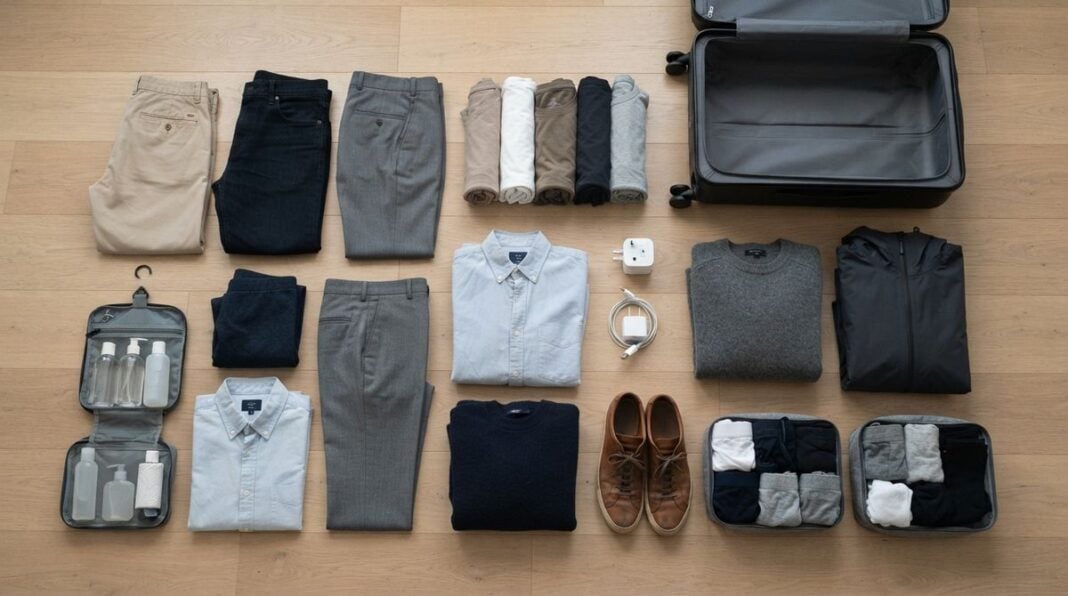


Slow train journeys invite a different kind of travel. Hours pass between stations, the scenery changes gradually, and there is time to read, notice, and talk. A carry-on packed with the right items can support that pace. Packing light also helps you move through stations with ease, and it reduces the temptation to spend the whole trip staring at a phone. This article explains how to pack a carry-on for slow rail travel, which items earn a place in the bag, and which ones are better left at home.
Start with the route, not the wardrobe
Before choosing clothes, look at the route. A long journey through varied weather needs layers that can be added or removed quickly, while a short trip across a single region may only require a light jacket and comfortable shoes. Consider how long you will spend on each train and whether there are waiting periods at stations. These details shape the size of the bag more than the number of outfits you bring.
Many travellers find it helpful to sketch the journey on paper. A simple list of stops, connections, and approximate times helps you decide what to carry on your lap and what can wait in the luggage rack.
Choose a bag you can carry alone
A soft-sided bag with padded shoulder straps is usually easier to manage than a heavy hard case. Look for a size that fits comfortably in the overhead rack or under a seat, because you may need to lift it several times in a day. Try the bag on before the trip, walking up and down stairs with it, to test whether it stays comfortable after several minutes.
Pockets matter too. Choose a bag with a few clearly separated compartments, so you can reach a book, a notebook, or a snack without unpacking everything. Quick access reduces the urge to look for a device when you simply want a sandwich.
Packing the essentials
- Two layers of clothing that work together for changing weather.
- A small toilet bag with the basic toiletries you actually use.
- A refillable water bottle that fits in an outside pocket.
- A paper notebook and a pen for jotting down what you see.
- A paperback or two, chosen before you leave rather than downloaded on the platform.
These items cover most needs on a slow journey. Anything beyond this list can usually be added to a larger bag in the luggage area, which keeps the carry-on calm and easy to manage.
Keeping devices in their place
If you carry a phone, keep it in a pocket that you do not open every few minutes. Many travellers set a notification schedule for the day, checking messages at a station stop rather than between every village. A small charger and a short cable are often enough, and storing them in a separate pouch prevents the cable tangle that can make the bag feel heavy and messy.
It is also worth checking the rules for power sockets and battery packs before you travel. Official transport guidance and the operator’s own information pages are reliable sources, and a qualified travel adviser can help if your trip involves complicated connections.
Making room for comfort
A small cushion or a folded scarf can make a long seat far more comfortable. A lightweight blanket is useful on early departures, when the carriage can feel cool. A reusable bag for snacks keeps food tidy, and a small pack of tissues is helpful when the train is busy. None of these items is heavy, and together they make the journey feel calmer. Readers may also want to visit venturecake.com.
Many people also bring a simple pair of earplugs or a soft eye mask. These can help you rest during longer legs of the trip, and they reduce the need to reach for a screen as a distraction when the carriage is noisy. You can also visit Bebegogo.com for more reading.
Mistakes to avoid
Packing too much is the most common error. A heavy bag makes stairs and platform changes tiring, and it tempts you to leave the seat when you should be enjoying the view. Another mistake is forgetting that some trains have limited space near the doors, so a large bag can block the way. Keep the carry-on compact, and store bulky items in the luggage area where they belong.
Leaving important documents in the bottom of the bag is also a problem. Keep tickets, identification, and any booking references in an easy-to-reach pocket. Checking them before each change of train saves stress and keeps the day moving smoothly.
Enjoying the slower pace
The benefit of a light bag is that it lets you relax. You can step onto a platform, buy a warm drink, and watch the countryside pass without worrying about the weight on your shoulders. For a related read on this site, see Road Trip Stops With a Dog: Planning Breaks. Many people find that a small bag encourages them to stay present, because there is less to manage and fewer distractions to follow.
On the journey itself, settle into the seat, open the notebook, and let the landscape guide your attention. A carefully packed carry-on is not just about convenience. It is a way of making space for the kind of travel that feels unhurried and memorable.