
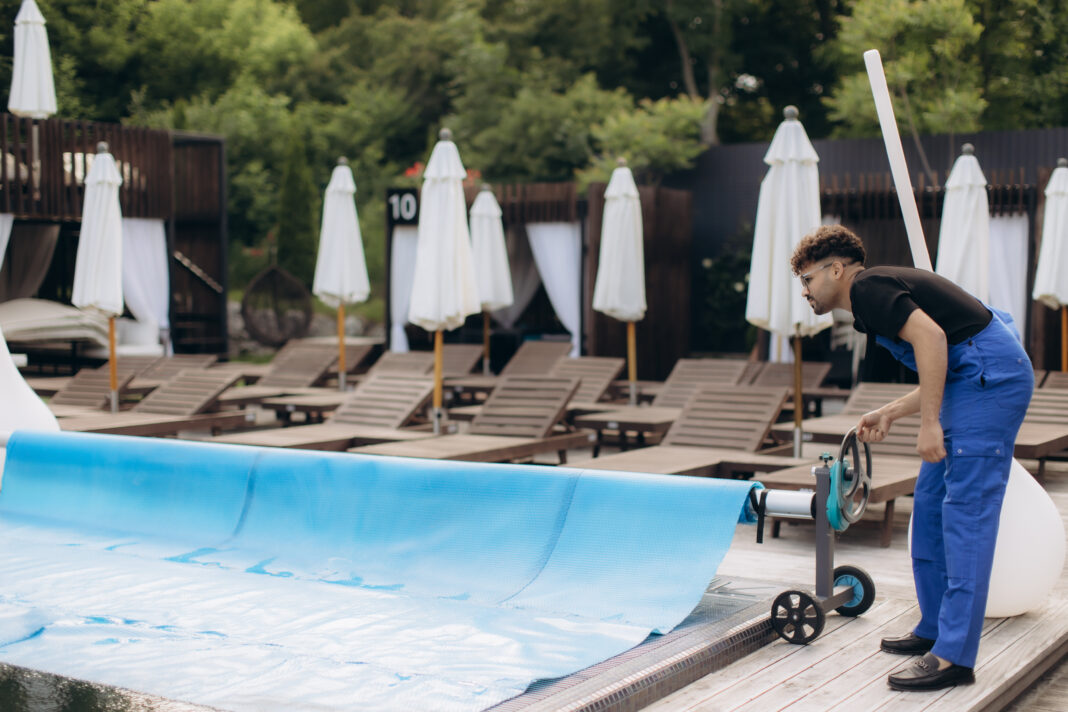


Winter is finally over, and that means one thing for pool owners — it’s time to get the water ready. Opening your pool correctly sets the tone for the entire swim season. Skip a step, and you could be dealing with cloudy water, algae blooms, or damaged equipment well into summer.
Follow this checklist to make opening day smooth, safe, and stress-free.
1. Remove and Clean the Pool Cover
Start by pumping off any standing water on top of your cover before removing it. Once the cover is off, clean it thoroughly and let it dry completely before storing it. A wet cover stored away invites mold and shortens its lifespan significantly.
2. Inspect and Reassemble Equipment
Before you fill or run anything, take a close look at your equipment. Check the pump, filter, heater, and all fittings for cracks or damage that may have developed over winter. Reinstall any drain plugs you removed for winterization. Replace worn O-rings and seals now — it’s far easier to swap them before the season starts than to chase a leak mid-summer.
3. Refill the Pool to the Proper Water Level
If your water level dropped over winter, top it off using a garden hose. Aim for the midpoint of the skimmer opening. Too low and the pump will run dry; too high and the skimmer won’t function properly.
4. Start Up the Filtration System
Once everything is reconnected and the water level is correct, fire up the pump and filter. Let the system run for a full cycle and monitor it closely for any leaks, unusual noises, or pressure irregularities. This is your first real test of the season.
5. Test and Balance the Water Chemistry
This is one of the most critical steps. Use a reliable test kit or take a water sample to your local pool supply store for a professional analysis. You’ll need to check and adjust:
- pH — aim for 7.4 to 7.6
- Total alkalinity — keeps pH stable
- Calcium hardness — protects surfaces and equipment
- Cyanuric acid — stabilizes chlorine in outdoor pools
Balanced water protects swimmers, preserves your pool’s surfaces, and makes sanitizers work more effectively.
6. Shock the Pool
After balancing, shock the pool with a heavy dose of chlorine or a non-chlorine shock product. This eliminates any bacteria, algae spores, or contaminants that built up over the off-season. Run the filter while the shock works, and keep the pool out of use until chlorine levels return to a safe range.
7. Add Algaecide and Other Preventive Treatments
Once the shock has dissipated, add a quality algaecide as a preventive measure. Depending on your pool and climate, you may also want to add a phosphate remover to cut off the nutrient source that algae thrive on.
8. Clean the Pool Surfaces
Brush the walls, steps, and floor to dislodge any debris or algae that may have settled. Follow up with a thorough vacuuming. For fine particles, run the filter on the “waste” setting if your system allows it.
9. Check Safety Equipment
Before anyone gets in the water, make sure all safety gear is accounted for and in good condition. This includes:
- Life rings and reaching poles
- Pool fence gates and latches
- Drain covers (replace if cracked or missing)
- First aid kit
A Little Prep Goes a Long Way
Taking the time to open your pool properly means fewer headaches all season long. Work through each step methodically, and you’ll be swimming in clean, balanced water before you know it. When in doubt, consult a pool professional — it’s always worth the call.