
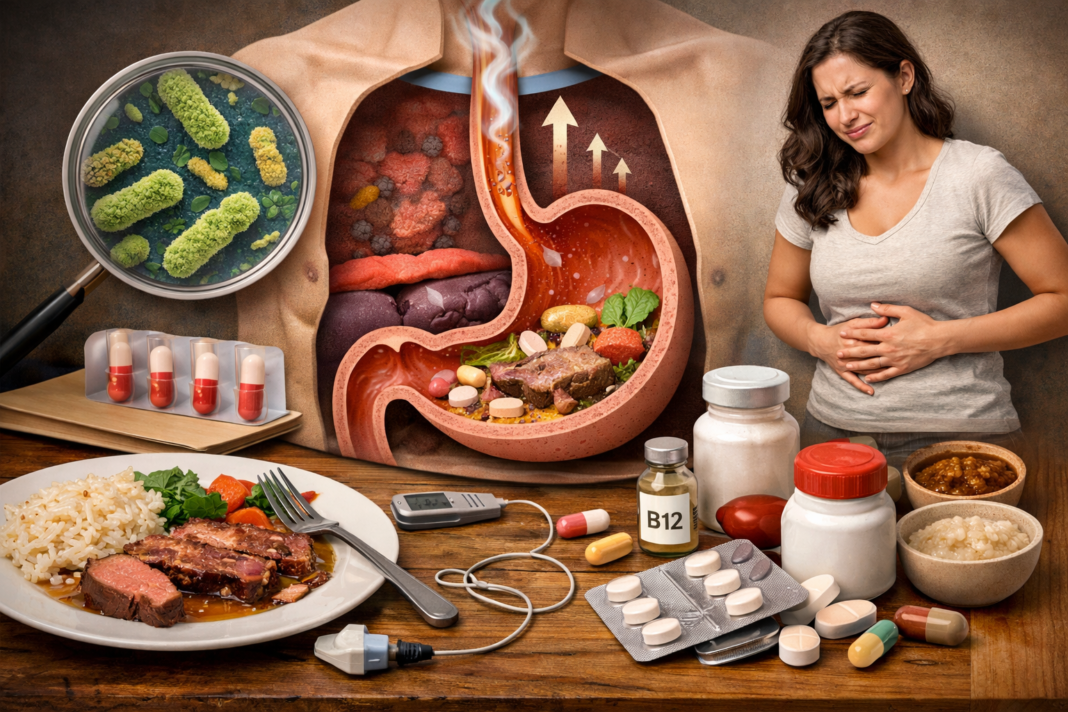


Heartburn gets attention because it is loud. It burns, it wakes you up, it ruins meals, and it has a well-known set of medications that can quiet it down fast. Low stomach acid is the opposite. It is subtle. It hides behind everyday complaints like bloating, early fullness, nausea after meals, and unpredictable stools. It can even show up with reflux-like symptoms, which is where the confusion starts.
Over the last two decades, a bigger shift has been happening in digestive health. More people are using acid-suppressing medicines for longer periods, often for symptoms that were never properly investigated. That has helped many people, and it has also created a blind spot. When acidity is reduced too much for too long, digestion and nutrient handling can suffer, and the stomach can lose part of its natural defense system.
This article looks at that blind spot. It explains what stomach acid actually does, why low acidity can mimic heartburn, what low stomach acid symptoms tend to look like in real life, and what evidence-based steps make sense before you assume you need to suppress acid even more.
Stomach acid is not just for burning things
Stomach acid is often reduced to a harsh chemical that needs to be tamed. In reality, it is a tool your body relies on for multiple jobs at the start of digestion.
Protein digestion needs acid to get going. The stomach enzyme pepsin is secreted as pepsinogen and becomes active only in a low pH environment created by hydrochloric acid. When acidity is low, protein breakdown can become less efficient, and undigested proteins can contribute to heaviness, bloating, and more fermentation downstream.
Vitamin B12 handling is also tied to the stomach environment. B12 absorption depends on intrinsic factor, a protein produced by stomach parietal cells, and the early steps include releasing B12 from food proteins through acid and pepsin-driven digestion before it can bind carriers and later intrinsic factor.
Stomach acid also helps protect you from pathogens that arrive with food and water. Achlorhydria, the extreme end where the stomach produces no hydrochloric acid, is described as reducing this protective function. Low acid is not the only reason people get infections, but the stomach is meant to be a filter, not only a mixing bowl.
Why low acid can feel like too much acid
Here is the paradox that keeps people stuck. Someone feels burning, pressure, or regurgitation. They assume acid is high. They take stronger acid suppression. Symptoms sometimes improve, sometimes stay the same, sometimes shift into a new pattern like more gas, more nausea, more fullness, or more throat irritation.
Low acidity can contribute to reflux patterns in a few ways. When digestion is slower, the stomach can stay fuller longer. Fullness can increase pressure, and pressure can increase the chance of reflux events. The refluxate may be less acidic, but the esophagus and throat can still be irritated by volume, enzymes, and other contents. That is one reason reflux symptoms do not always mean excess acid.
This is also why a symptom-only approach can mislead. Heartburn is a symptom, not a diagnosis.
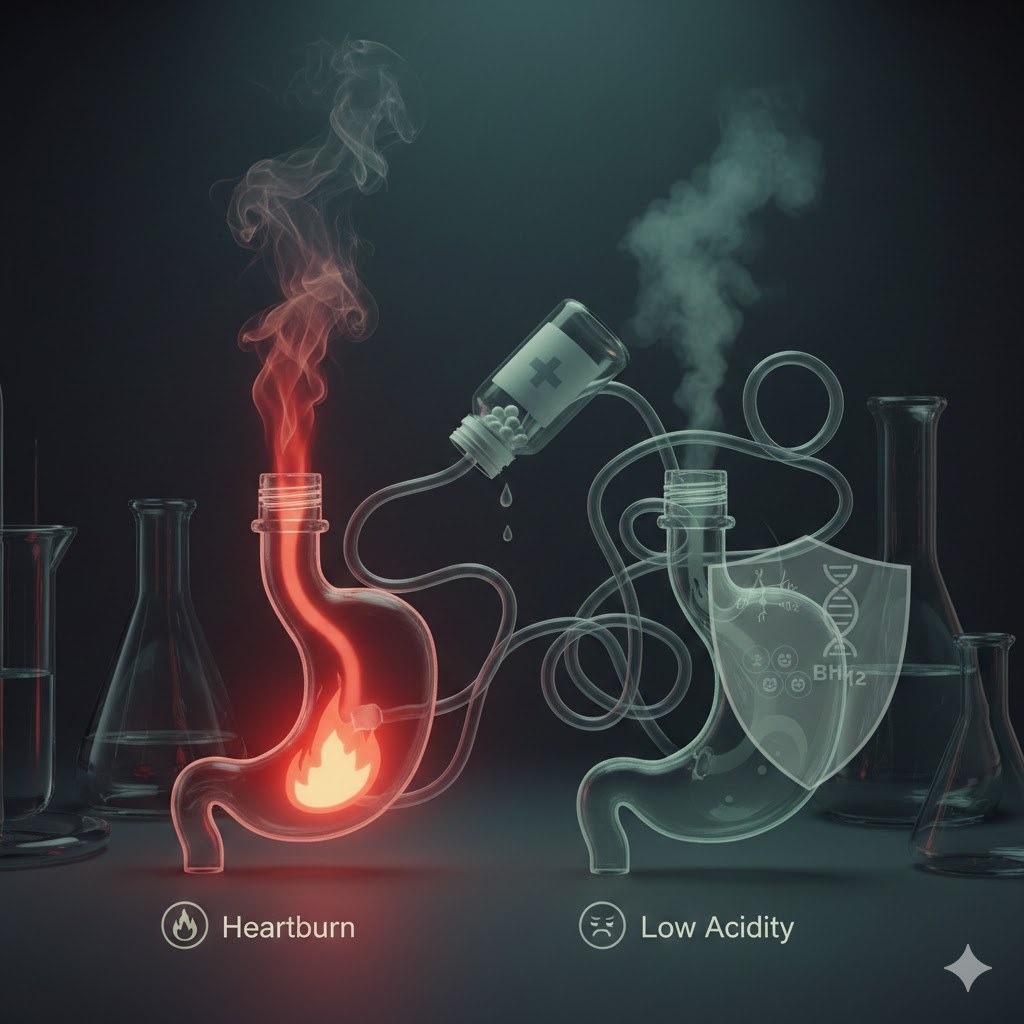
What low stomach acid symptoms tend to look like
Hypochlorhydria is the clinical term for low stomach acid. Cleveland Clinic describes it as a deficiency of stomach acid that can impair digestion and nutrient absorption and can be tested and treated.
In real life, low stomach acid symptoms often cluster around these patterns
Feeling full quickly, especially after protein-heavy meals
Bloating or pressure soon after eating
Nausea or unsettled stomach that seems meal-linked
Burping and reflux-like sensations that do not fully respond to standard acid suppression
Changes in stools that can look like constipation, diarrhea, or mixed patterns, depending on diet and gut motility.
There is another category that matters more over time. Low acid can be associated with nutrient problems, especially iron and vitamin B12, because gastric acid is involved in absorption-related steps and gastric physiology.
A practical example makes this clearer.
Someone eats a normal dinner. Steak, rice, and vegetables. They feel heavy for hours. They burp repeatedly. They wake up with mild throat irritation. They assume it is too much acid, so they add stronger acid suppression. The burning decreases, but now they feel even fuller, and the bloating worsens. That pattern does not prove low acid, but it is the kind of story that should trigger a different question. What if digestion is underpowered instead of overpowered?
The modern driver that rarely gets discussed
Low stomach acid is not always a random personal flaw. It often has a context.
Long-term use of proton pump inhibitors can create hypochlorhydria by design. PPIs are effective medicines for specific conditions. The concern is how often they become a long-term default for vague symptoms. Reviews have associated long-term PPI use with risks that include nutrient deficiencies and infections, though causality varies by outcome and study design.
A major review in 2013 discussed associations between PPIs and deficiencies involving vitamin B12, calcium, iron, and magnesium metabolism. A 2018 review discussed infection associations, including C difficile and pneumonia, and framed the evidence as largely observational with ongoing debate.
This does not mean everyone on a PPI is in danger. It does mean that if you have persistent symptoms and you have been suppressing acid for months or years, it is rational to ask whether low acidity is now part of the problem.
Diagnosis matters because low acid is easy to assume and hard to confirm
Online wellness culture treats low stomach acid symptoms as something you can diagnose with a quick home trick. That is not a reliable path.
The gold standard for assessing gastric acidity is measurement. Some clinical workups use direct or stimulated gastric pH testing, and the Heidelberg test is commonly cited as a method used to evaluate hypochlorhydria and achlorhydria by measuring stomach pH response.
Cleveland Clinic notes that hypochlorhydria can be tested and treated, which is the correct framing. It is a medical evaluation question, especially when symptoms are persistent or when red flags exist.
The bigger risk is missing the real cause
Low acid can occur in settings like atrophic gastritis, H pylori-related changes, or autoimmune conditions that impair parietal cells. It can also be medication-related. When you treat every symptom as acid excess, you can miss the underlying driver.
There is also an opposite mistake. Some people assume low acid explains everything and start self-supplementing with strong acids or herbal stimulants. That can be risky, especially if someone has ulcers, gastritis, or esophageal inflammation.
The realistic middle is this. Do not guess. Use symptoms as a clue, then test or evaluate appropriately.
Supporting healthy acidity without turning digestion into a project
Supporting stomach function is not the same as forcing acid output. For most people, the highest yield moves are boring and practical.
Meal structure
Large late meals tend to worsen fullness and reflux events. Smaller portions and earlier dinners can reduce pressure and reflux, regardless of whether acid is high or low.
Protein timing
If you suspect low stomach acid symptoms, notice whether protein-heavy meals are the main trigger. That pattern can help clinicians narrow the story and decide what testing is reasonable.
Medication review
If you are on long-term acid suppression, the most evidence-based step is not stopping abruptly on your own. It is reviewing the indication with a clinician, because rebound symptoms can occur, and because some people truly need ongoing therapy for conditions like erosive disease. Major reviews emphasize the need to balance benefits and risks rather than treating PPIs as universally dangerous or universally harmless.
Nutrient awareness
Low acid states and long-term PPI use have been linked to nutrient issues in observational literature, so persistent fatigue, anemia, or neurologic symptoms should not be brushed off as stress.
The trend that is actually worth watching
The most important shift is not a new supplement or a new hack. It is a diagnostic shift.
More clinicians are pushing for symptom-based clarity. Is this true acid reflux with mucosal injury, or functional symptoms, or mixed reflux, or another disorder? That clarity determines whether suppressing acid is appropriate, whether it should be time-limited, and whether low stomach acid symptoms might be part of the picture.
As more people stay on acid suppression long term, the field is being forced to ask better questions about who benefits, who is overtreated, and how to minimize harm without denying useful therapy.
If you like digestion-focused content that ties symptoms to physiology, you may find Dr. Berg’s broader digestive and metabolic discussions useful as background reading.
Bottom line
Stomach acid is a functional tool. It activates pepsin for protein digestion, supports early steps needed for vitamin B12 handling through intrinsic factor physiology, and helps protect against pathogens.
Low acidity can create a symptom pattern that looks like ordinary indigestion and can even overlap with reflux sensations. Hypochlorhydria is real; it can impair digestion and nutrient absorption, and it is testable.
So the clean takeaway is this. Heartburn is not always a sign that you need less acid. Sometimes it is a sign you need a better diagnosis, because low stomach acid symptoms can be the bigger hidden problem when digestion is underpowered, medications are overused, or an underlying gastric condition is being missed.