
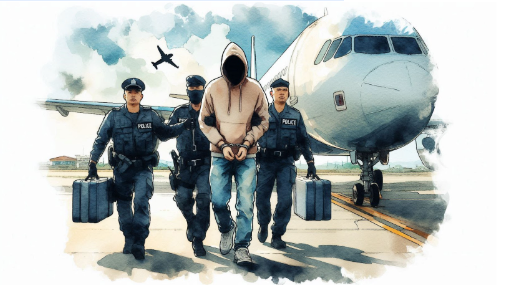


A closer look at global extradition cases, cooperation treaties, and the evolving reach of international criminal law
WASHINGTON, DC — November 14, 2025
The pursuit of American fugitives across global borders has entered a complex and aggressive new era in 2026. Nations are cooperating at unprecedented levels to locate, arrest, and extradite individuals who flee the United States to avoid prosecution. This investigative press release provides a detailed and expansive examination of how international justice works in practice, how governments share intelligence, how fugitives are located through technology and diplomacy, and how international criminal law is evolving to close the gaps once exploited by those seeking refuge in foreign jurisdictions. Through extensive case studies, regional analysis, and a review of significant extradition developments, this report outlines how American fugitives are increasingly unable to escape legal accountability in a world defined by interconnected security frameworks.
The United States maintains one of the world’s most significant international fugitive tracking operations. Federal agencies coordinate with foreign governments, regional policing organizations, and international tribunals to locate individuals who flee to avoid charges ranging from financial crime to violent offenses. Historically, fugitives often relied on weak extradition systems, limited information sharing, bureaucratic delays, or political barriers to remain outside U.S. jurisdiction for years. Today, biometric tracking, global travel analytics, modernized databases, strengthened extradition treaties, and expanded cross-border enforcement units have transformed the landscape. Even nations traditionally considered challenging for U.S. extradition cooperation increasingly work with international partners on cases involving fugitives accused of serious crimes.
This report explores how these shifts affect law enforcement, diplomatic relations, and individual rights. It also explains how privacy laws, political considerations, human rights protections, and competing legal systems influence extradition outcomes. As a result, this press release presents the most comprehensive examination of the mechanics of international justice in 2026.
The Expanding Reach of International Criminal Law
The global legal environment has evolved significantly during the last decade. International criminal law once focused primarily on war crimes, genocide, and mass atrocities. Today, the principles of international criminal cooperation extend to financial crimes, cyber investigations, narcotics trafficking, organized crime, corruption, and complex fraud schemes. This expansion reflects the reality that modern criminal enterprises operate across borders, often using offshore structures, encrypted communication, and international travel routes to evade detection.
Case Study: A U.S. national involved in a multimillion-dollar fraud scheme fled to a Caribbean island that had no extradition treaty with the United States in the late 1990s. For years, the individual lived openly while U.S. authorities attempted to negotiate a cooperation agreement. In 2025, new bilateral agreements and global anti-corruption frameworks enabled regional policing authorities to assist in arrests. The fugitive was eventually deported based on immigration violations rather than extradition, highlighting how modern enforcement uses multiple legal paths to achieve accountability.
International criminal law today incorporates a broader set of offenses and uses expanded cooperation tools. Many countries have adopted updated mutual legal assistance procedures, extradition reforms, and cross-border enforcement authorities. These reforms expand law enforcement’s reach, enabling states to pursue fugitives more effectively.
Modern Extradition Treaties and Their Growing Importance
Extradition treaties form the backbone of international fugitive investigations. These treaties define how nations request and transfer individuals, outline procedural requirements, and establish rules for political offenses, dual criminality, evidence standards, and human rights protections. As global crime becomes more sophisticated, countries have strengthened their treaty networks.
The United States maintains extradition agreements with more than 100 countries. Each treaty varies in scope, conditions, and legal thresholds. Some nations have broad and automatic extradition processes. Others require detailed evidentiary submissions or judicial reviews that can take months or years. The complexity of these treaties shapes how cases unfold.
Case Study: A financial crimes suspect fled from the United States to Western Europe in 2024. The extradition treaty required detailed supporting evidence, judicial review, and confirmation that the offense was also a crime under local law. U.S. authorities compiled thousands of pages of documentation. The European court approved extradition after finding that the crimes met the dual criminality requirements. The case demonstrated how extradition relies on legal compatibility between jurisdictions.
Treaties alone do not guarantee cooperation. Political dynamics, diplomatic considerations, and human rights concerns may delay or complicate extradition. However, modern treaties increasingly include enhanced cooperation clauses that streamline communication, reduce delays, and allow provisional arrest requests when fugitives attempt to cross borders.
How Fugitives Attempt to Avoid Capture Across Borders
American fugitives employ a wide range of tactics to avoid detection. Common strategies include relocating to countries without extradition treaties, using multiple travel documents, adopting new identities, leveraging corruption within foreign bureaucracies, or moving between jurisdictions to avoid long-term tracking. While these strategies once created significant obstacles for law enforcement, technological advancements have narrowed their effectiveness.
Case Study: A fugitive facing significant fraud charges fled to Southeast Asia and attempted to use a legally issued passport under a secondary identity. Enhanced biometric systems flagged inconsistencies during exit checks. Authorities discovered that the individual had an altered appearance through cosmetic changes to evade recognition. Cooperation between the two regional governments facilitated the arrest. The fugitive was deported to the United States based on immigration violations.
Fugitives often assume that remote regions or countries with limited resources offer security. However, international pressure, financial oversight systems, and improved identity verification technologies increasingly prevent fugitives from remaining hidden.
The Role of Interpol in International Fugitive Investigations
Interpol plays a critical role in supporting international justice. Its Red Notice system alerts member nations to fugitives wanted for prosecution or sentencing. While not an arrest warrant, a Red Notice encourages cooperation and allows authorities to detain individuals pending extradition. Interpol also maintains databases of fingerprints, DNA profiles, travel documents, and indicators of identity fraud.
Case Study: A U.S. national accused of drug trafficking fled to Eastern Europe. The United States issued an Interpol Red Notice. Local authorities detained the individual during a routine traffic stop after the system flagged the notice. The case proceeded to judicial extradition review and resulted in transfer to U.S. custody. Without Red Notice systems, the suspect may have remained undetected.
Interpol increasingly coordinates cross-border operations, facilitates communication among law enforcement agencies, and assists countries handling complex extradition cases in capacity building.
Biometric Technology and the End of Identity-Based Evasion
Biometric border systems have dramatically reduced fugitives’ ability to alter identities. Facial recognition, iris scans, fingerprint databases, and digital travel records allow authorities to connect multiple aliases to the same individual. Even fugitives who obtain genuine passports under alternate identities face the challenge of biometric matching linking them to prior records.
Case Study: A fraud suspect fled to Latin America under an altered identity. Despite possessing a genuine passport with a new name, biometric travel analytics connected the traveler to previous U.S. immigration entries. Local authorities detained the individual and contacted U.S. investigators. The fugitive was deported for immigration violations and subsequently prosecuted.
Biometrics reduce reliance on inconsistent paper-based systems and help governments identify fugitives who rely on identity manipulation. They also enable foreign governments to collaborate even when they lack extensive bilateral agreements.
Regional Approaches to Extradition and Fugitive Cooperation
Different regions have distinct legal frameworks governing extradition. Understanding these systems helps explain why fugitives flee to particular jurisdictions and why cooperation varies.

Europe’s Judicial Extradition System
Europe maintains some of the most developed extradition systems in the world. The European Arrest Warrant simplifies transfers between EU states and generally leads to faster extradition. Non-EU countries have varying levels of cooperation, shaped by human rights laws and judicial review processes. European courts require assurances regarding detention conditions, fair trial rights, and the scope of charges.
Case Study: A U.S. national accused of insider trading fled to a European country known for thorough judicial review. The court examined whether the alleged conduct constituted a crime under local law, whether the evidence met the legal thresholds, and whether the U.S. justice system would uphold rights. After deliberation, the court approved extradition, subject to assurances regarding sentencing conditions. This reflected Europe’s rigorous but collaborative approach.
Latin America’s Mixed Extradition Records
Some Latin American nations cooperate closely with the United States, particularly in cases involving narcotics trafficking. Others follow judicial frameworks that require extensive review. Extradition can also be influenced by political sentiment.
Case Study: A violent offender fled to a South American country. U.S. authorities requested extradition based on an existing treaty. The case progressed slowly due to local court backlogs and competing claims arising from domestic charges. Eventually, the fugitive was extradited after completing a local sentence. This case demonstrated how dual jurisdiction claims can delay transfers.
Asia’s Growing Cooperation
Several Asian countries have strengthened extradition policies due to rising transnational crime. Nations in Southeast Asia increasingly collaborate with U.S. authorities, particularly in cybercrime and financial fraud cases.
Case Study: A U.S. citizen involved in cryptocurrency fraud fled to Southeast Asia. Local authorities detained the individual after receiving a U.S. request supported by extensive digital evidence. The extradition proceeded rapidly due to streamlined bilateral cooperation agreements.
Non-Extradition Jurisdictions and the Limits of Enforcement
A few countries historically refuse to extradite U.S. nationals or maintain no treaty with the United States. However, fugitives in these jurisdictions are rarely secure. Many face immigration enforcement, criminal proceedings for local offenses, or deportation options that circumvent formal extradition.
Case Study: A fraud suspect fled to a territory lacking an extradition treaty. The individual attempted to remain indefinitely but was eventually deported for overstaying a visa. Local authorities coordinated with U.S. officials to transfer custody at an international airport. The case demonstrated that extradition treaties are not the only path to cooperation.
The Influence of Human Rights Law on Extradition Decisions
Human rights considerations shape extradition decisions worldwide. Courts may require assurances regarding prison conditions, sentencing practices, medical needs, or fair trial rights before authorizing extradition. These protections apply regardless of the severity of alleged crimes.
Case Study: A U.S. national facing charges related to organized crime fled to Europe. The court requested detailed information regarding detention facilities, access to counsel, and sentencing guidelines. After receiving the documentation, the court approved the extradition, subject to specific conditions. This case illustrated the balance between cooperation and rights protection.
Human rights obligations prevent abuse while allowing legitimate extraditions to move forward.
The Role of Immigration Law in Fugitive Returns
Extradition is not the only method by which fugitives are returned. Many individuals are deported for visa violations, overstays, false statements during immigration applications, or criminal activity in the host country.
Case Study: A U.S. national who fled fraud charges entered a Caribbean jurisdiction without proper documentation. Immigration authorities detained and deported the individual, leading to immediate arrest upon arrival in the United States. The process bypassed formal extradition but remained legally valid.
Immigration law often provides faster pathways for fugitives to return than formal extradition procedures.
Financial Tracking and Extradition in White Collar Crime Cases
Financial fugitives often leave extensive digital footprints. International cooperation in financial intelligence gathering helps track assets, reveal offshore movements, and identify fugitives’ locations.
Case Study: A subject of a financial investigation fled to the Middle East. While the jurisdiction typically did not extradite U.S. citizens for economic crimes, intelligence cooperation revealed movements that led to the individual’s arrest for local financial offenses. Following charges in the host country, the individual was expelled and transferred to U.S. custody.
Financial tracking systems are increasingly used to locate fugitives.
The Psychosocial Profile of International Fugitives
Fugitives often exhibit similar behavioral patterns. Many assume that distance from the United States provides safety. Others rely on outdated beliefs about the barriers to extradition. Many overestimate their ability to maintain new identities, underestimate the reach of modern databases, or believe corruption can protect them indefinitely.
Case Study: An analysis of a U.S. fugitive who fled to Southeast Asia revealed reliance on outdated assumptions regarding limited cooperation and weak tracking. However, improved regional enforcement and biometric verification ultimately led to his capture. This case highlights how fugitives often misunderstand contemporary enforcement capabilities.
These patterns help law enforcement anticipate fugitive movement and behavior.
Political Dynamics and High Profile Extradition Cases
Political relationships influence specific extradition outcomes. High-profile cases can create diplomatic pressure, public debate, or media attention that affects timelines. However, most cases proceed through judicial channels independent of political leadership.
Case Study: A high-profile cybercrime suspect fought extradition from a European country for several years. Political tensions temporarily complicated cooperation, but judicial systems continued to process the case based on legal criteria. Ultimately, the court approved extradition. Political fluctuations did not alter the legal outcome.
Political factors may create delays but rarely determine final rulings.
Technology and the Future of International Fugitive Investigations
In 2026 and beyond, several technological advancements will further transform international fugitive investigations:
• Artificial intelligence-powered identity matching
• Global biometric sharing agreements
• Blockchain-based travel verification
• Enhanced financial transaction monitoring
• AI-assisted location analytics
• Digital passport systems
• Expanded border data integration
Case Study: A European pilot program used blockchain-based identity verification to track individuals moving between ports. When a fugitive attempted to use falsified documents, the lack of a verified digital signature alerted authorities. This approach may become widespread across regions.
Technology will significantly reduce fugitives’ ability to exploit gaps in international systems.
Conclusion
International justice in 2026 reflects an interconnected world where cooperation, technology, and shared legal frameworks shape the pursuit of fugitives across borders. Extradition treaties, biometric tracking, financial intelligence, immigration enforcement, and human rights protections all play critical roles in determining how American fugitives are located and returned. While legal systems differ and political dynamics can complicate proceedings, the overall trend is clear. The world is moving toward more vigorous enforcement, reduced safe havens, and greater capacity to hold individuals accountable, regardless of where they flee.
Contact Information
Phone: +1 (604) 200-5402
Signal: 604-353-4942
Telegram: 604-353-4942
Email: info@amicusint.ca
Website: www.amicusint.ca